Students learn best when they teach.

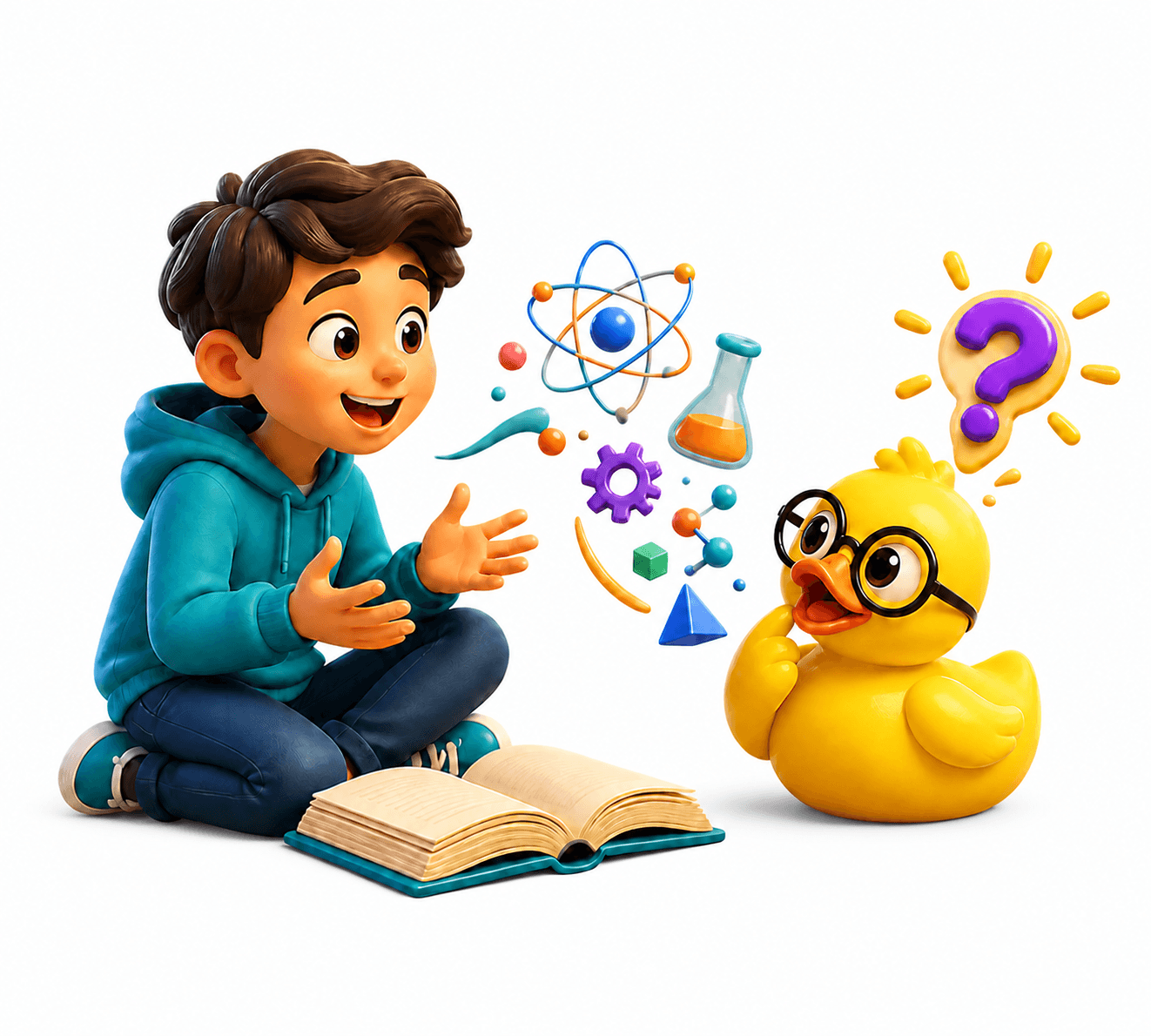
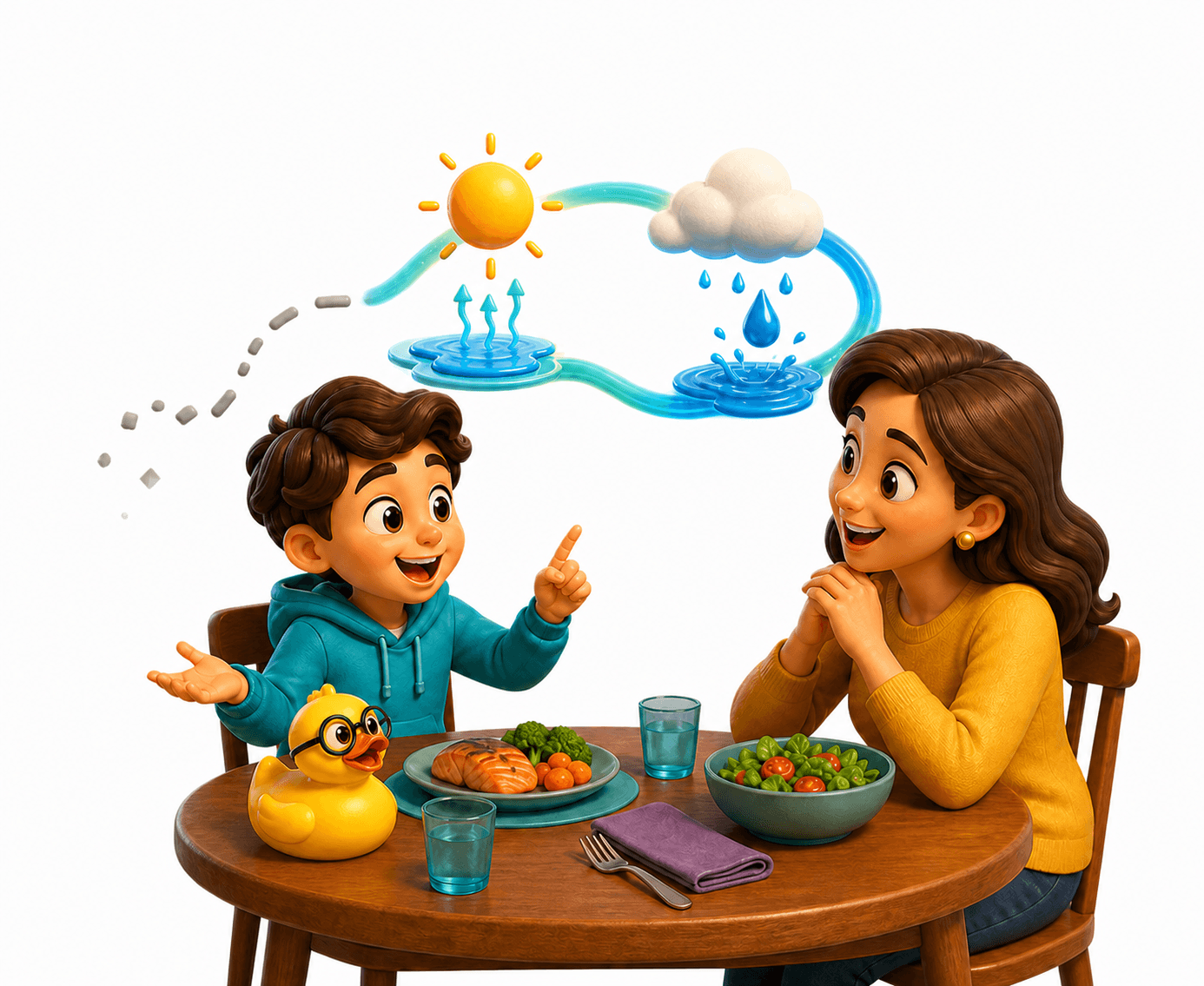
RubberDuck is a Socratic learning tool that helps primary and lower-secondary students master Science by explaining what they know out loud to a patient little duck. They build real understanding, and the skill of putting it into words. Not memorised answers.

For parents, schools & tuition centres. No spam, just launch news.
Live session
Photosynthesis · P5 Science
Nice thinking! So where in the leaf does that actually happen?
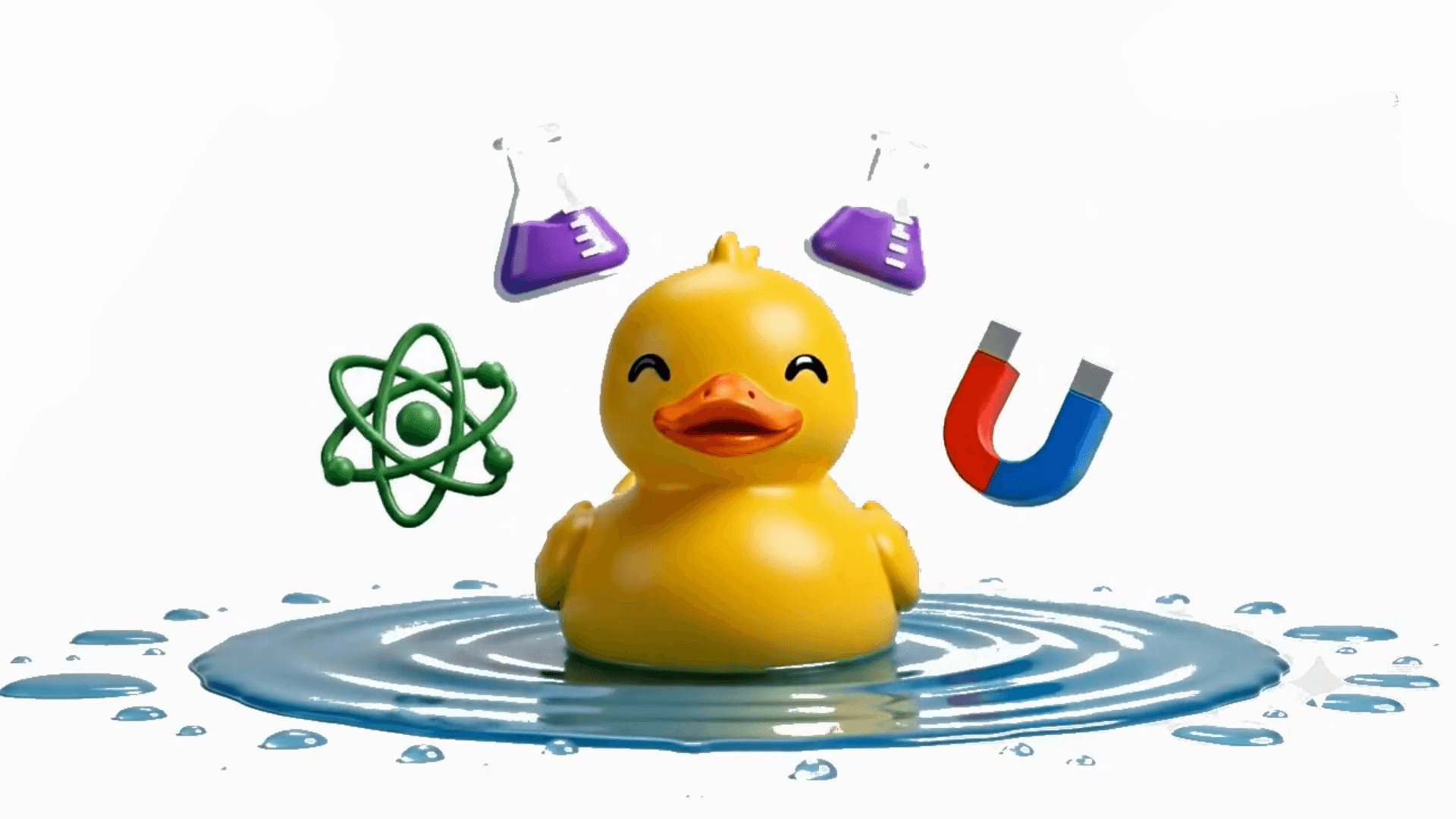
Yellow Rubber Duck AI companion listening during a Science lesson
You: “It turns water and CO₂ into glucose.”
Understanding72%
🏅 +25 pts
🔬Aligned to the MOE Science syllabus 🛡️AI-safe by design 🎙️Voice-first, no typing 🎓Piloting with Primary 5 · P4–Sec 2 next
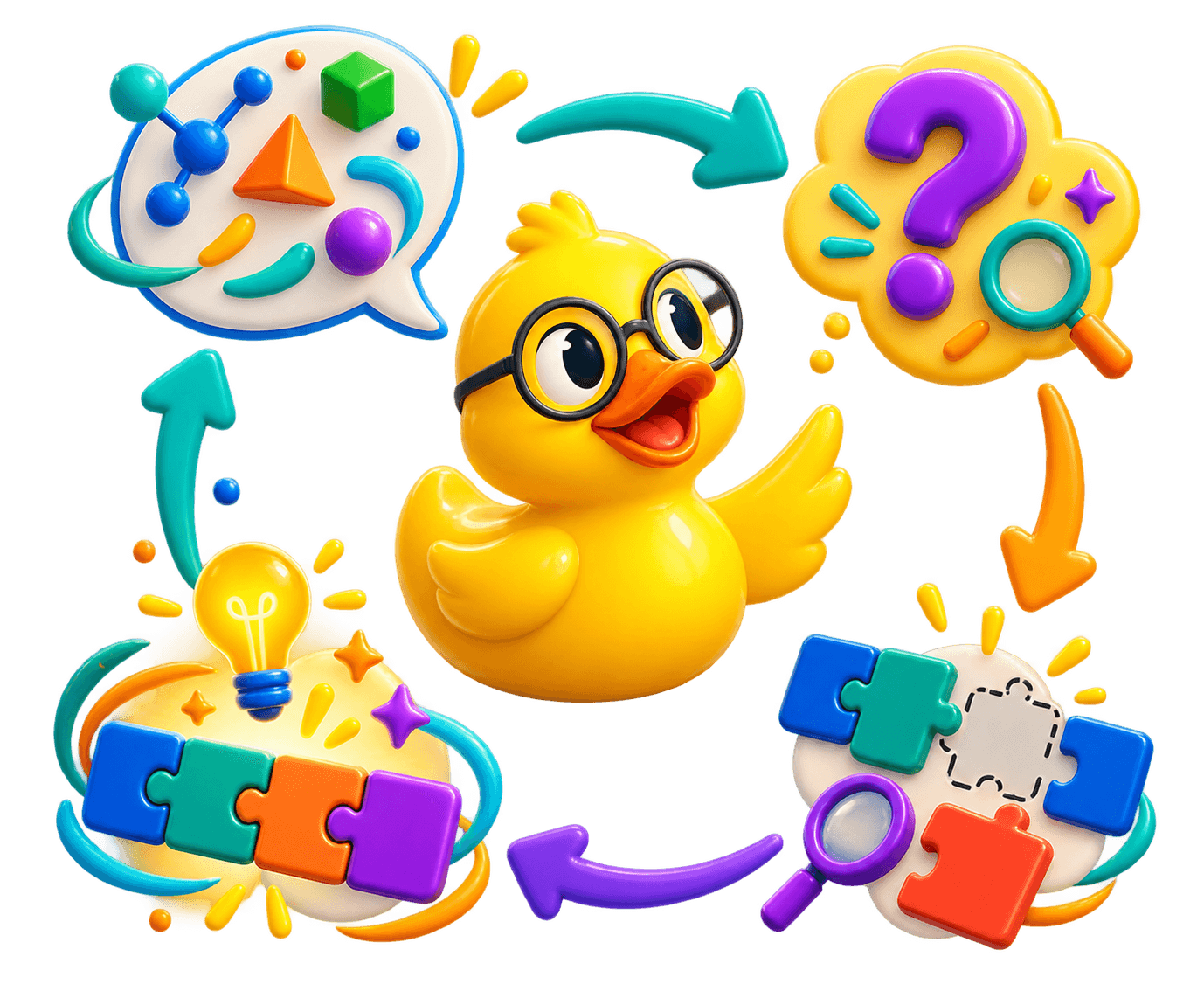
The teach-the-duck loop

How it works

No worksheets, no flashcards. Your child picks a topic and simply explains it out loud, and the duck does the rest.

1

Pick a topic

Choose a Science concept from the MOE syllabus: the water cycle, photosynthesis, electrical circuits.

2

Teach the duck out loud

Your child explains it in their own words. The duck listens, then asks “why?” and “what if?”, gently probing the gaps.

3

Close the gaps together

The duck walks your child through the gaps it spotted and gently untangles anything they explained incorrectly.

Why it works

They remember it. And they can explain it.

Teaching isn't just a nice idea. It's one of the most studied ways to learn, and it builds two things at once: knowledge that sticks, and the skill of turning what's in your head into words another person can follow.

Outcome one

Knowledge that sticks.

When children teach instead of just revising, they put in more effort, spot their own gaps, and remember far more.

What the research shows
Students who teach a character learn more, and struggling learners gain the most.
Chase, Chin, Oppezzo & Schwartz · J. Science Education & Technology, 2009
Just expecting to teach improves recall and how knowledge is organised.
Nestojko, Bui, Kornell & Bjork · Memory & Cognition, 2014
Explaining in your own words boosts understanding, across 69 studies.
Chi et al., 1994 · meta-analysis Bisra et al., 2018
Outcome two

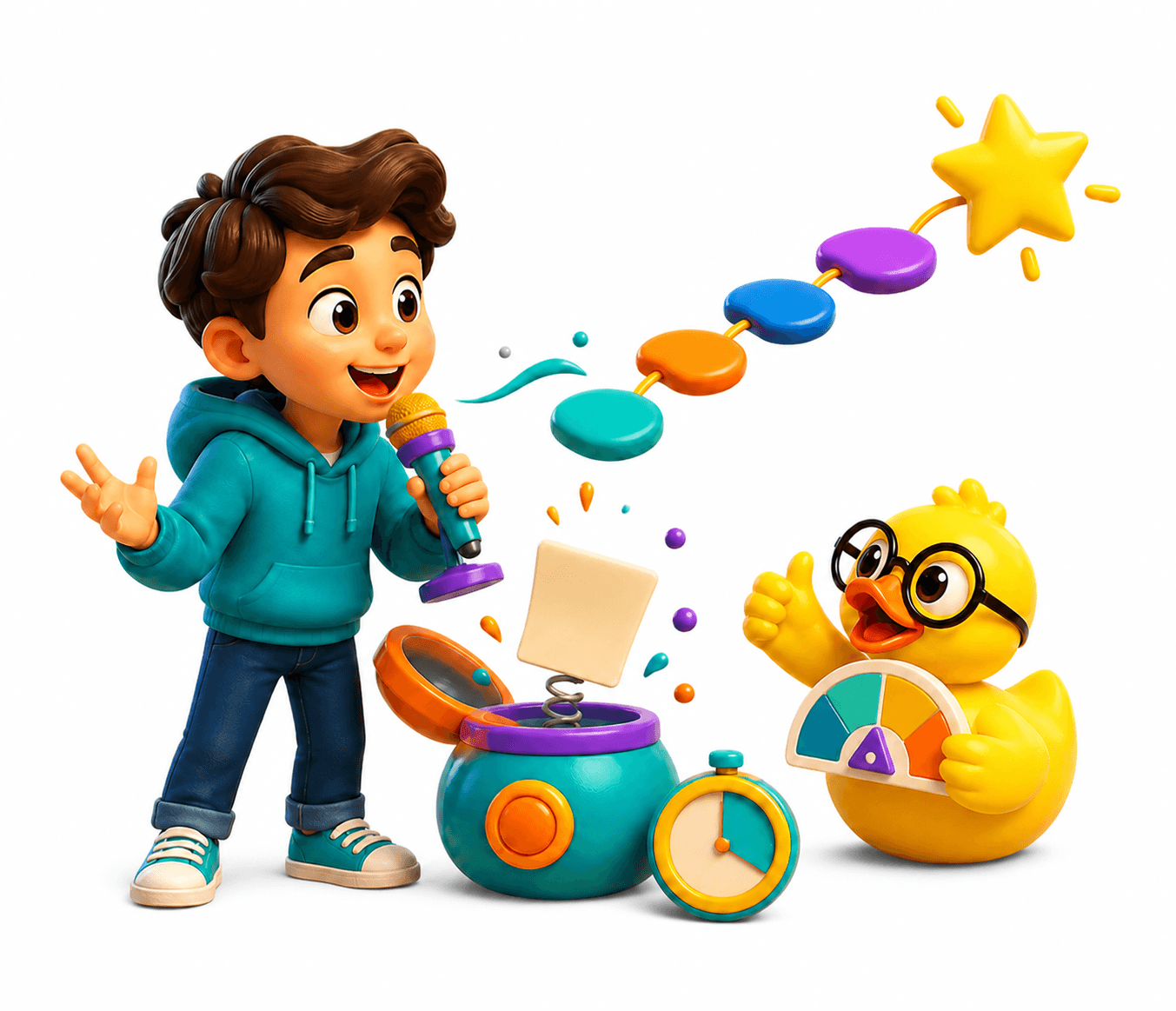
The skill of explaining clearly.

Knowing something and being able to explain it are different skills. Every session trains the second one, the same skill open-ended exam questions mark for:

🧩 Break it down 💬 Find the words 🎯 Land the explanation
What the research shows
Explaining out loud to someone beats writing it down.
Hoogerheide et al. · Contemporary Educational Psychology, 2016
Explaining well is a skill, and it grows with the right follow-up questions.
Roscoe & Chi · Review of Educational Research, 2007
Playing the teacher pushes students to rehearse and sharpen ideas until they can say them clearly.
Galbraith & Winterbottom · Educational Studies, 2011
Sneak peek

Mastery that feels like play.

Every session earns points. Points unlock hats, scarves and accessories for their duck, and a mastery map fills in as concepts click. Effort becomes visible, and coming back tomorrow becomes the easy part.

Ava's duck 🏅 1,240 pts 🔥 6-day streak
Yellow Rubber Duck AI companion in Ava's rewards panel
Wardrobe
🎩 🧣 🕶️ 🔒250 pts
Mastery map · Cycles4 of 6 concepts
References. Chase, C. C., Chin, D. B., Oppezzo, M. A., & Schwartz, D. L. (2009). Teachable agents and the protégé effect. Journal of Science Education and Technology, 18, 334–352. · Nestojko, J. F., Bui, D. C., Kornell, N., & Bjork, E. L. (2014). Expecting to teach enhances learning. Memory & Cognition, 42(7), 1038–1048. · Chi, M. T. H., De Leeuw, N., Chiu, M.-H., & Lavancher, C. (1994). Eliciting self-explanations improves understanding. Cognitive Science, 18(3), 439–477. · Hoogerheide, V., Deijkers, L., Loyens, S. M. M., Heijltjes, A., & van Gog, T. (2016). Gaining from explaining: Learning improves from explaining to fictitious others on video, not from writing to them. Contemporary Educational Psychology, 44–45, 95–106. · Roscoe, R. D., & Chi, M. T. H. (2007). Understanding tutor learning: Knowledge-building and knowledge-telling in peer tutors' explanations and questions. Review of Educational Research, 77(4), 534–574. · Galbraith, J., & Winterbottom, M. (2011). Peer-tutoring: What's in it for the tutor? Educational Studies, 37(3), 321–332.
For parents

See understanding grow, not just grades.

Progress you can actually see. A simple overview of what's mastered and what needs another look. No jargon.
Motivation built in. Points for every session, spent on outfits and accessories for their duck. Learning that feels like play.
Confidence and communication. Explaining out loud builds the skill of putting ideas into words.
Safe and focused. Guided conversations only: no open chat, no distractions.
Aligned to school. Practice maps to the MOE Science syllabus, so it reinforces class.
Join the waitlist
This week · Ava, P5 4 sessions
The water cycleMastered
PhotosynthesisGetting there
Electrical circuitsRevisit
Focus next: Ava can define photosynthesis but pauses on where it happens. A quick chat about the leaf will help it click.
Class 5B · Science Topic · Photosynthesis
Marcus T.Mastered
Priya S.In progress
Wei Jie L.Mastered
Nurul H.Revisit
18 of 24 students can explain the concept unprompted.
For schools & tuition centres

A patient teaching assistant for every student.

A class dashboard. See who's mastered what, and who needs a second look, at a glance.
Concept checks without marking. RubberDuck assesses understanding through conversation, and summarises it.
Curriculum-aligned. Maps to your scheme of work and the MOE Science syllabus.
Runs as a supplement. Ten minutes of teaching-practice a day, at home or in class.
Request a pilot
Made for Singapore

Aligned to the MOE Science syllabus

Every topic maps to what your child is actually learning in school. Our pilot covers Primary 5 Science, theme by theme, with more levels on the way.

🔄 Cycles

The water cycle Reproduction in plants Reproduction in humans

⚙️ Systems

Circulatory & respiratory systems Plant transport system Electrical systems

⚡ Energy

Photosynthesis How plants make food Energy in food
Levels: Primary 5 · pilot Primary 4 · coming soon Primary 6 · coming soon Secondary 1–2 · coming soon

Safe by design, because it's built for children

No open chat
RubberDuck only discusses the topic your child chose. No open-ended conversation, no rabbit holes.
Age-appropriate
Every prompt and response is tuned for upper-primary and lower-secondary learners.
Private by default
Sessions stay with your family or school. We never sell data or use it for ads.
Understanding, not answers
The duck asks questions rather than handing over answers, so the thinking stays with your child.

Questions, answered

Yes. There's no open-ended chat. RubberDuck only talks about the topic your child chose, in age-appropriate, guided conversation, with no ads, no open internet, and we never sell your data.

Give your child the confidence that comes from truly understanding.

Join the waitlist and be first to teach the duck. We're onboarding families, schools, and tuition centres in Singapore.

No spam, just launch news. Unsubscribe anytime.